Fresh herbs can completely change the flavor of a dish. A small handful of parsley, basil, cilantro, dill, or mint can make food taste brighter, fresher, and more balanced. But as useful as fresh herbs are, they are also one of the ingredients most likely to go bad quickly when they are not stored the right way. Many home cooks buy them with good intentions, use a small portion, and then find the rest wilted or slimy a few days later.
Learning how to store fresh herbs properly is one of the simplest ways to reduce food waste and make everyday cooking easier. When herbs stay fresh longer, they are more likely to be used in soups, salads, pasta dishes, sauces, and drinks throughout the week. Good storage does not require special equipment or complicated methods. It mostly comes down to understanding that different herbs behave differently and need slightly different treatment.
Some herbs are delicate and tender, while others are hardier and more structured. Because of that, storing all herbs the same way often leads to disappointing results. Once you understand which herbs like moisture, which ones prefer drier conditions, and which ones should never go in the refrigerator, keeping them fresh becomes much more manageable.
Why fresh herbs spoil so quickly
Fresh herbs are delicate because they contain a lot of moisture and have thin leaves and stems. Once harvested, they begin losing freshness immediately. If they are trapped in too much moisture, they can become slimy and rot. If they dry out too quickly, they wilt, lose aroma, and become unusable.
Temperature also affects them. Some herbs do well in the fridge, while others are damaged by cold air. Light, airflow, and the condition of the stems all play a role. This is why simply leaving herbs in the plastic bag from the store often leads to poor results. That packaging may be convenient for transport, but it is rarely the best environment for keeping herbs fresh at home.
Proper storage matters not only for freshness, but also for flavor. Herbs that are stored well retain their aroma, texture, and color much longer. Herbs that are poorly stored often lose the very qualities that made them worth buying in the first place.
Tender herbs and hardy herbs should not be stored the same way
One of the easiest ways to improve herb storage is to divide herbs into two main groups: tender herbs and hardy herbs.
Tender herbs include basil, parsley, cilantro, mint, and dill. These herbs have softer stems and more delicate leaves. They are more sensitive to drying out, but they can also suffer if they sit in too much trapped moisture.
Hardy herbs include rosemary, thyme, oregano, and sage. These herbs have sturdier stems and firmer leaves. They generally last longer and can tolerate drier conditions better than tender herbs.
Understanding this difference helps you choose a method that supports the herb instead of shortening its life.
The best way to store parsley, cilantro, and mint
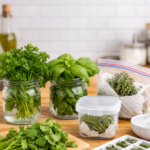
Parsley, cilantro, and mint usually stay fresh longest when stored like a bouquet. Trim the ends of the stems slightly, place them in a jar or glass with a little water, and loosely cover the tops with a plastic bag. Then store them in the refrigerator.
This method helps keep the stems hydrated while protecting the leaves from drying out too quickly. The plastic covering should be loose rather than tight, since the herbs still need a little airflow. The water should be changed every couple of days to keep it clean.
This approach works especially well for home cooks who use herbs throughout the week. It keeps them visible, easy to grab, and often fresher than leaving them in the original package.
Basil should be treated differently
Basil is one of the easiest herbs to damage by refrigeration. Cold temperatures can darken the leaves and cause them to wilt faster. Instead of storing basil in the refrigerator, it is usually better to keep it at room temperature.
The best method is similar to the bouquet approach: trim the stems, place the basil in a glass with a little water, and leave it on the counter away from direct sun and heat. A very loose cover can help, but basil generally does best when treated more like fresh flowers than refrigerated greens.
Because basil is so delicate, it is best used sooner rather than later. Even with good storage, it usually has a shorter life than hardier herbs.
The best way to store rosemary, thyme, oregano, and sage
Hardy herbs generally do better with a simpler method. Wrap them loosely in a slightly damp paper towel, then place them in a reusable container or partially open bag in the refrigerator. This gives them enough moisture to stay fresh without trapping so much humidity that they rot.
Because these herbs are sturdier, they tend to last longer than tender herbs. They also hold their flavor well, which makes them very practical for people who cook a few times a week but do not use herbs every single day.
Checking them every few days is still important. If the towel becomes too wet, the herbs can start to spoil. If it dries out completely, they may lose freshness faster.
Wash herbs before storing or before using
This is one of the most common questions, and the answer depends on how well you can dry them.
In general, herbs last longest when they are washed only if they can be dried thoroughly first. If you wash them and leave too much moisture on the leaves, they can spoil very quickly in the refrigerator. A salad spinner or clean kitchen towel helps a lot here.
For many home cooks, the easiest solution is to store herbs unwashed and rinse them just before use. This reduces the risk of extra moisture and often extends shelf life. The exception is when herbs are visibly dirty and really need to be cleaned immediately.
When freezing herbs makes sense
If you know you will not use the herbs in time, freezing is often a better choice than letting them spoil. Some herbs freeze better than others, but many can still be preserved in a useful way.
Parsley, cilantro, dill, and chives freeze reasonably well when chopped and stored in small containers or freezer bags. Another practical method is freezing chopped herbs in olive oil or water using an ice cube tray. This works well for soups, sauces, and cooked dishes.
Frozen herbs usually lose some of their texture, so they are not ideal for garnish or fresh salads. But for cooked meals, they remain very useful and help reduce waste.
Signs that herbs are no longer worth keeping
Fresh herbs should smell clean and vibrant. If they become slimy, blackened, mushy, or develop an unpleasant odor, they are past their usable stage. A few wilted leaves can often be removed, but once the bunch starts breaking down significantly, the flavor and texture are usually no longer worth saving.
Checking herbs early helps prevent one bad bunch from affecting other produce nearby. It also makes it easier to decide whether they should be used immediately, trimmed, or discarded.
Why proper herb storage matters in everyday cooking
Storing herbs properly may seem like a small kitchen habit, but it has a real effect on how practical home cooking feels. When herbs stay fresh longer, they are easier to use across multiple meals. A bunch of parsley can stretch from soup to pasta to salad. Mint can be used in drinks and then again in yogurt sauces or fruit dishes. Basil can brighten pasta one day and sandwiches the next.
This kind of flexibility makes cooking feel less wasteful and more efficient. It also encourages people to use fresh ingredients more often, which can improve both flavor and confidence in the kitchen.
Final thoughts
Fresh herbs do not need complicated treatment, but they do need the right kind of storage. Once you understand which herbs prefer water, which ones prefer light moisture, and which should stay out of the fridge, it becomes much easier to keep them fresh and flavorful for longer.
For home cooks, this is one of those simple skills that pays off again and again. Better herb storage means less waste, better flavor, and a kitchen that feels more practical every day.